
Flashpoints & Insights
SOCOSIX Behind the Headlines for March/April 2026
April 20, 2026 · SOCOSIX Strategies
IRAN WAR — 2 Thanks in large part to Pakistan’s mediation, a conditional two‑week ceasefire between the United States and Iran was agreed on April 7, 2026. The agreement – if it holds and there are more questions than an
April 20, 2026
SOCOSIX Behind the Headlines for March/April 2026
IRAN WAR — 2
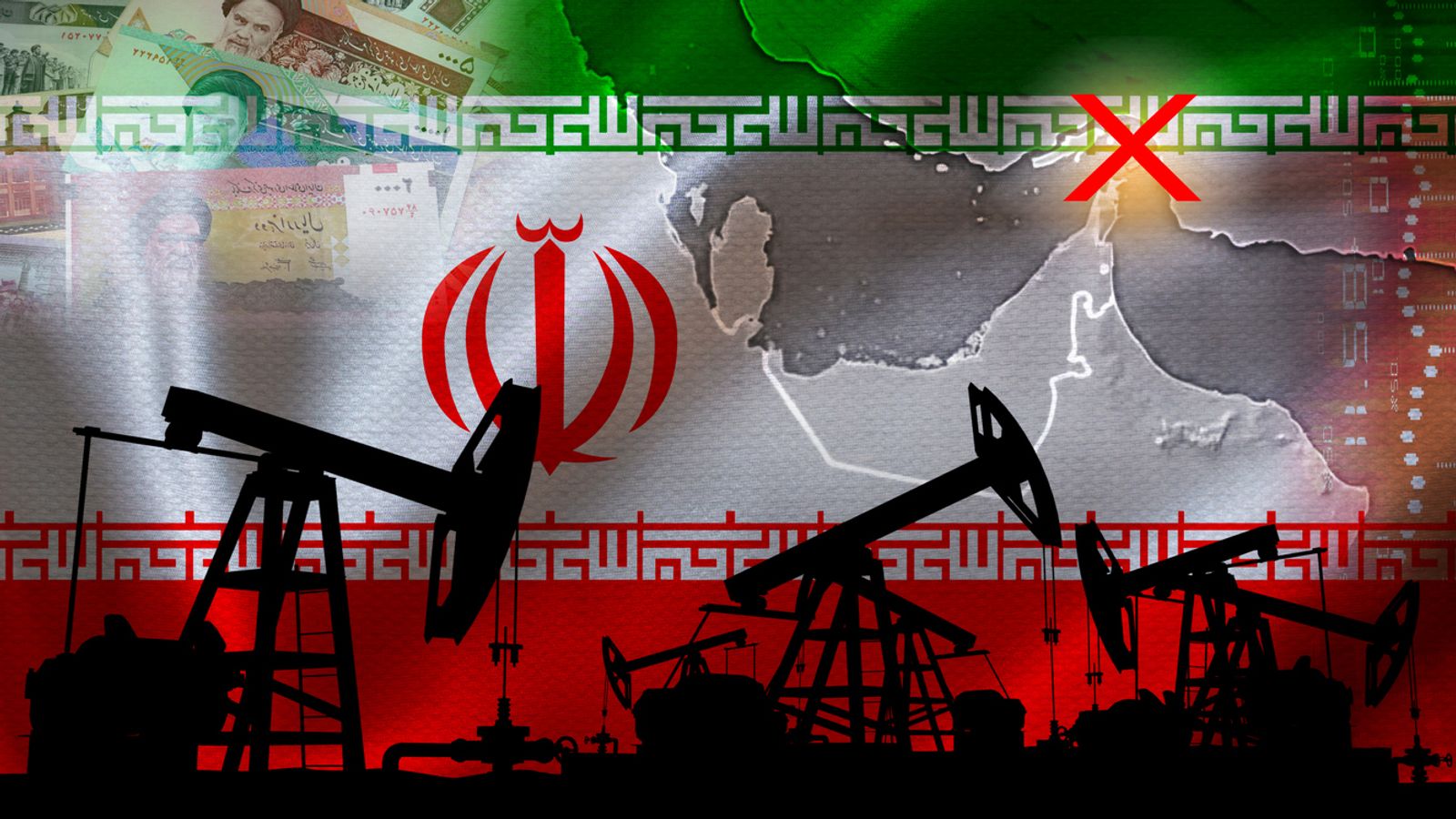
Thanks in large part to Pakistan’s mediation, a conditional two‑week ceasefire between the United States and Iran was agreed on April 7, 2026. The agreement – if it holds and there are more questions than answers at the time of this report — will temporarily ease one of the most dangerous flashpoints in global geopolitics. Although none of the other core points insisted on by Washington and Israel were met (perhaps including nuclear limits, missiles, regime change), the agreement requires Iran to reopen the Strait of Hormuz. President Trump said the U.S. would help manage the backlog of more than 800 vessels trapped in the Gulf. Negotiations will reportedly continue on April 9 in Pakistan. Despite the truce, reports of continued attacks across the region underscore how fragile the pause remains. Iran claims that several of its conditions are not being addressed. The war in Lebanon continues unabated, for example.
Financial markets responded with dramatic relief:
• Oil prices plunged by roughly 14–18%, marking the steepest drop in nearly six years. Brent and WTI both fell below $100 per barrel after weeks of war‑driven spikes.
• Gasoline prices dropped, though analysts warned it could take weeks for retail prices to fall meaningfully and months to return to pre‑war levels.
• Global equities surged, with major Asian indices jumping 4–5%, European markets rising more than 3%, and U.S. futures climbing sharply. Investors rotated into Treasuries, tech, and AI‑linked stocks.
• Gold rallied, reflecting both relief and lingering uncertainty about whether the ceasefire will hold.
Comment: Currently, it is hard to find a reputable analyst who does not subscribe to the view that this war has proven to be a costly, strategic failure for the U.S. To do what is necessary to achieve the articulated goals of this war (and these have never been sufficiently defined) will require a level of U.S. military involvement which is not currently supported by either the public or Congress. While this ceasefire – if it holds – will reduce immediate risk, it highlights the strategic vulnerability of the U.S. and its partners. It does not forestall Iran’s future ability to disrupt global energy flows, while the need for Pakistan to broker a deal leaves the U.S. appearing as weakened in the eyes of many allies and adversaries alike. End Comment
JAPAN AND SINGAPORE DEEPEN DEFENSE TIES
In a visit to Tokyo in mid-March by Singapore Prime Minister Laurence Wong, Japan and Singapore agreed to deepen their ties to include a strategic partnership as they mark their sixty-year anniversary of diplomatic relations.
Comment: Singapore has always been a non-aligned country and, for this reason, the inclusion of what is essentially a defense agreement with Japan is significant as it calls into view Singapore’s continued wariness of China. End Comment.
U.S. IMPROVING RELATIONS WITH SAHEL COUNTRIES
The Trump Administration is quietly reshaping U.S. policy toward Africa’s junta-led governments, reviving a long-running debate about the degree to which the US should prioritize democracy promotion over its strategic interests, sparking domestic criticism over its apparent abandonment of democracy-promotion efforts abroad.
The Biden presidency had cut off military ties with Mali, Burkino Faso, and Niger after a series of coups between 2020 and 2023, but opponents argued that strategy ceded ground in the region to Russia. However, recent Administration moves, included removing sanctions on Malian officials, signing up Burkina Faso and Niger to our new public health development initiative, and dispatching a senior State Department official on a tour of the Sahel have signaled a resurgence in interest in the Sahel region.
Comment: One Brookings Institution scholar told SOCOSIX that the new effort must make a return to civilian rule a prerequisite for any real rapprochement. However, a State Department source told us that our efforts toward normalization with the transitional governments in the Sahel are not an endorsement of how the authorities came to power. He said that while the U.S. continues to support the gradual transition to accountable governance, we recognize that lecturing on democratic norms during complex local realities is ineffective. Instead, our focus reflects pragmatic cooperation based on shared interests, while preserving the space for a credible transition over time . End Comment.
CHINA’S TOOLING ADVANTAGE HAMPERS U.S. MANUFACTURING GOALS
A leading economy analyst working at JP Morgan recently gave SOCOSIX her take on why – try as he might – President Trump will be unable to substantially restore the massive industrial superiority we used to enjoy. She recalled that Apple CEO Tim Cook once explained why he cannot shift manufacturing out of China by saying that, in China, “you could fill multiple football fields” with tooling engineers but in the U.S., “I am not sure we could fill the room.”
She went on to add that for the US, this is a chronic problem. The engineering skills — along with the factories — that this country needs to rebuild its industrial base disappeared to China a generation ago, and they are not coming back. Asked for an example to make her point, she said that the lack of experienced tooling engineers — experts with inside-out knowledge of injection molds, dyes, drills, jigs, and gauges to manufacture goods at scale — is probably the single greatest impediment to reshoring production to the U.S. She cited the recruitment struggles for SAMSUNG and other foreign companies trying to build state-of-the-art chip factories in the U.S.
Comment: History has taught us that it was our industrial capacity and resilience that wins wars. In World War II, it was our ability, as the Arsenal of Democracy, to out-build and replace war materiel that beat the Japanese and contributed to Germany’s defeat. Our ability to replace key military ordnance in our current war with Iran poses a major problem for us. And there is no doubt that we will never be able to match China in a similar confrontation, according to a Pentagon analyst not authorized to speak publicly on this topic. The bravery and capability of our troops is second to none, he concluded, but keeping them in state-of-the-art kit and 21st century weapons is difficult in any conflict that lasts any length of time. End Comment.
LIQUIDITY RISKS DEVELOPING?
For the past few weeks, Bloomberg Radio has raised the issue about mounting redemption pressures at some of the world’s most prominent private credit industry players. The concern reflects voices on Wall Street and beyond that the booming private-credit industry may be entering a period of serious financial stress.
Funds connected to Blackstone, Apollo Global Management, and KKR are all apparently facing increased redemption requests, while a large private-credit vehicle managed by Cliffwater reported in mid-March that some of its investors requested withdrawals equal to 14% of its assets. The $33 billion fund plans to pay out only about half of those requests this quarter, forcing the remainder to wait months before receiving their cash – a move known as “gating,” after redemption requests surged well beyond the levels the funds are designed to handle.
This has become a particular problem for Blue Owl where, on April 2, investors in two of its funds asked to pull out some $5.4 billion in the first quarter, adding to the growing stream of capital leaving the once-hot corner of Wall Street. The redemptions amounted to 22% of Blue Owl Capital’s giant $36 billion private-credit fund and 41% of a separate technology-focused fund.
Such large redemptions are dangerous for investment firms like Blue Owl because they threaten the key driver of their share prices: the amount of money they manage and collect fees on. The firms built their funds to withstand prolonged bear markets, but outflows may continue for months or even years.
Blue Owl opted to cap redemptions in both funds at 5%, a reversal from its decision in January which allowed shareholders to redeem 15% from the technology fund. The about-face highlights the growing squeeze on fund managers who must balance mounting requests from clients who want out against the interests of investors left in the funds. Blue Owl’s stock price dropped sharply early Thursday, April 2, as did those of rivals, before recovering. However, the shares are now down more than 40% this year.
Comment: The concern raised on Bloomberg and by other Wall Street analysts warrants monitoring. The private credit industry currently provides financing to thousands of companies, often stepping in where banks once dominated corporate lending. Critics note that the structure of many funds contains a potentially dangerous mismatch: they make long-term loans, often lasting five to seven years, while promising investors the ability to withdraw money every quarter. What appears to be a growing number of analysts – but not all – are suggesting that the current situation echoes patterns seen before the 2008 financial meltdown. Caveat Emptor. End Comment.
VENEZUELA: RECENT DEVELOPMENTS POINT TO A TRUMP SUCCESS?
The period since Nicolás Maduro’s removal and the installation of Interim President Delcy Rodríguez has produced a series of developments that analysts have told SOCOSIX clearly align with long‑standing U.S. policy objectives – and especially those enunciated by the Trump Administration. The pace of change has been unusually rapid, touching diplomacy, security, economic reform, and foreign investment.
Diplomatic normalization
The United States formally reopened its embassy in Caracas on March 30, signaling a restored channel for political engagement after years of rupture. The State Department characterized this as the start of “a new chapter” in bilateral relations, reflecting confidence in the interim government’s direction.
Political transition and governance
Secretary of State Marco Rubio stated that Venezuela is entering a transition phase that will culminate in free and fair elections, a core U.S. demand since the collapse of democratic institutions under Maduro. Interim President Rodríguez has moved quickly to consolidate authority and implement reforms that have been broadly received as pragmatic and stabilizing.
Human‑rights gestures and detainee releases
Several political prisoners and foreign detainees have been released, including French national Julien Fevrier and Venezuelan businessman Wilmer Ruperti. These actions have been interpreted as confidence‑building measures consistent with U.S. expectations for improved human‑rights practices.
Economic opening and regulatory shifts
The U.S. Treasury removed Rodríguez from sanctions lists, enabling her to oversee PDVSA’s U.S. subsidiaries and begin restructuring efforts. New general licenses issued on April 2 authorize U.S. participation in Venezuela’s critical minerals sector, including lithium, reflecting a strategic interest in supply‑chain diversification. Business delegations report renewed commercial activity in Caracas, with both U.S. and foreign firms exploring opportunities in energy, minerals, and infrastructure.
Energy sector stabilization
Venezuela’s oil exports have risen to roughly one million barrels per day, the highest level in years, indicating some operational recovery despite long‑term damage to refining capacity which is only at 31 percent of former capacity.
According to an energy source in Houston, Shell is in advanced discussions with the government to develop major offshore natural gas fields near Trinidad and Tobago, suggesting renewed confidence from global energy companies.
Security and Public Sentiment
A recent American businessman who recently returned from Venezuela, reports a perceptible decline in crime in Caracas compared to the final years of the Maduro era, attributed to improved economic conditions and targeted policing. Outlying regions remain less secure, but the capital’s stabilization has contributed to a broader sense of cautious optimism.
Comment: Taken together, these developments reflect a shift toward greater stability, economic reopening, and constructive engagement with the United States. Informed sources in two think tanks dealing with Latin American affairs have told us that the interim government’s early actions—combined with Washington’s calibrated easing of restrictions—have created conditions that many observers view as consistent with the policy goals articulated by the Trump Administration after Maduro’s removal. Security concerns remain very real, however, despite anecdotal evidence of improvements in the capital especially. These factors should be considered carefully before attempting to re-establish business ties in the country. End Comment.
Share:
PrevPreviousSOCOSIX Behind the Headlines for February/March 2026
On Key
Related Posts
SOCOSIX Behind the Headlines for May/June 2026
The Iran War The British news magazine, The Economist, correctly depicts the Iran war as feeling like the movie Groundhog Day, with nearly the same
SOCOSIX Behind the Headlines for March/April 2026
IRAN WAR — 2 Thanks in large part to Pakistan’s mediation, a conditional two‑week ceasefire between the United States and Iran was agreed on April
SOCOSIX Behind the Headlines for February/March 2026
U.S. Bites the Iran Bullet On February 28, after weeks of military buildup and increasingly sharp warnings from President Trump, the United States and Israel