
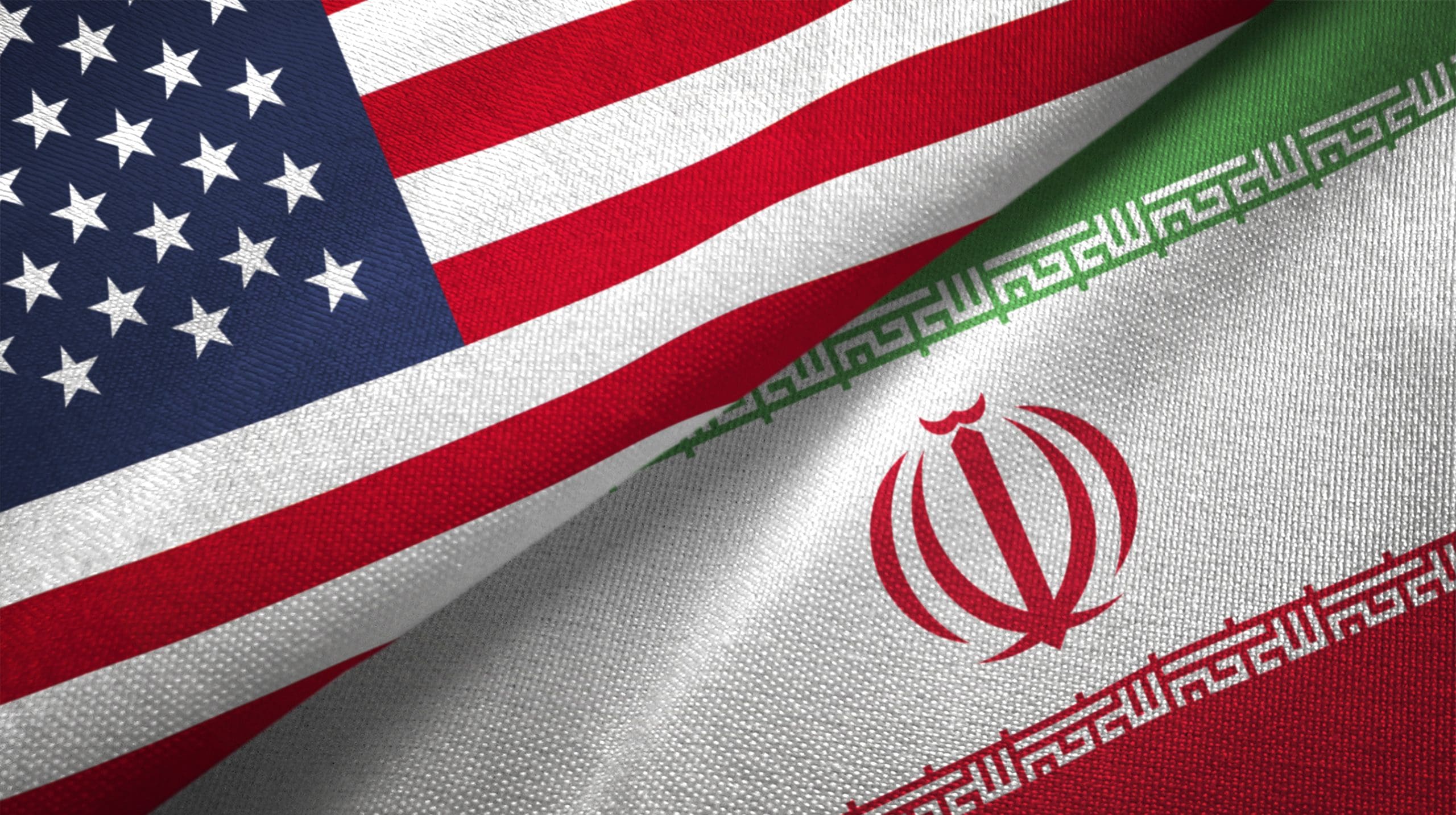
U.S. Bites the Iran Bullet
On February 28, after weeks of military buildup and increasingly sharp warnings from President Trump, the United States and Israel launched massive coordinated strikes against Iran. As with last year’s more limited operation, indirect talks between Washington and Tehran had been underway but had apparently stalled.
In a Truth Social post, the President said the goal of the operation was to prevent Iran from obtaining a nuclear weapon and to “defend the American people” by eliminating imminent threats from the regime. He urged Iranians to seize the moment as their “only chance for generations” to reclaim their government.
U.S. and Israeli officials later confirmed that IDF strikes on Tehran killed Supreme Leader Ayatollah Ali Khamenei along with several senior military and political figures — an escalation few analysts had believed either side would risk.
Additional U.S. strikes targeted military sites in Isfahan, Karaj, Kermanshah, Qum, and Tabriz. Iran retaliated quickly, firing ballistic missiles at Israel and at U.S. facilities across the Middle East, including in Bahrain, Kuwait, Qatar, and the UAE.
Comment: Many regional and domestic observers regard an all‑out war between Iran and the U.S./Israel as the worst possible outcome. Iran is a vast country of more than 90 million people. Though weakened by sanctions and internal dissent — including the brutal killing of more than 30,000 protesters in recent months — there is no organized opposition poised to take control should the Islamic Republic collapse, however unlikely that scenario remains. The President has spoken of a conflict that may last “days or weeks,” certainly longer than last year’s 15‑day confrontation between Israel and Iran (with U.S. support). A senior Iranian official, currently outside the country, told a SOCOSIX contact that the attack means “all‑out war.” His grief over the death of the Supreme Leader may have colored his assessment, but the warning should not be dismissed lightly. History offers its own caution. Saddam Hussein assumed in 1980 that a weakened Iran would crumble within weeks. Instead, Iran fought an eight‑year war of staggering brutality. One hopes Israeli planners have a clearer understanding of the terrain — political, military, and psychological — and the means to turn IRGC officers or more pragmatic figures within the regime who might help create an off‑ramp from this crisis. Air power alone has never won a war, and the American public’s tolerance for prolonged conflict — even those fought against Hitler or in defense of the Union — has always been limited. End Comment.
“Real” War Between Afghanistan and Pakistan?
Pakistan launched air attacks on Afghanistan’s capital, Kabul, as well as on Kandahar and Paktia, early on Friday, 28 February, in a significant escalation of serious border clashes which recently erupted along the Afghan/Pakistani border known as the Durand Line. The attacks targeted Taliban military installations as Islamabad declared “open war” on the group’s government, in the most serious military confrontation between the two neighbors in years. The strikes came hours after Afghan forces launched coordinated cross-border attacks on Pakistani military positions in six border provinces late on 27 February. Kabul claimed 55 Pakistani soldiers were killed and 19 outposts captured. Pakistan acknowledged two soldiers had been killed but dismissed the other claims as propaganda. It said Pakistan had eliminated at least 133 Afghan fighters in retaliation, while destroying at least 27 Afghan outposts.
Comment: Pakistan’s Defense Minister, Khawaja Asif, declared Pakistan’s patience exhausted, as he wrote on social media that “…now it is open war” between the two countries. Clashes last year ended after Qatar mediated a halt, but a permanent fix failed during peace talks which followed in Turkey. Now both countries are trying to put the war genie back in its box, especially as the U.S. and Iran appear poised to stir up security in the region if they cannot reach a deal on the nuclear question. A retired U.S. envoy to Islamabad told us that Pakistan is in a particularly bad situation at this time. While stronger militarily than the Afghans, the Taliban can withstand any aerial onslaught which Kabul can launch against it. The allegiance of the cross-border population existing between the two countries is uncertain, but will preclude any large-scale army response by the Pakistani military. China is the only country with leverage which might put an end to the current crisis, but even if this happens, there is no long-term solution in sight. End Comment.
Denmark Calls Snap Elections for March 24
Denmark was due to go to the polls for a general election no later than Oct. 31. But now the country’s left of center Prime Minister Frederiksen has decided to call a snap election on March 24. The governing Social Democrats suffered a near catastrophic defeat in December’s nationwide municipal elections, but the party has seen its poll ratings jump astronautically thanks to Frederiksen’s impassioned defense of Denmark’s sovereignty. According to the latest voter surveys, the prime minister’s party could net 22 percent of the vote, nearly doubling the share that her closest competitors, the Green Left, are projected to secure.
Comment: Canda’s Liberal Prime Minister Carney’s Liberals Party was all but certain to be crushed in that country’s general election last year. But Carney’s popularity soared following the highly undiplomatic assertion by President Trump that Canada should become our 51st state, followed by the issuance of punishing tariffs against our closest neighbor and ally and largest trading partner. Somehow, the consequences of this action led to a condition of myopia in Washington. And so now we have Denmark. Prime Minister Frederiksen has made it clear that she is calling for a larger political mandate because of the President’s threat to seize Greenland, a Danish territory. Chances are that she will get one and will then form a more leftist coalition which will be even less friendly to the USA than the current one. End Comment.
Iceland Joining the EU?
Iceland is weighing a vote on restarting EU membership talks as early as August, according to a source in the State Department. She told SOCOSIX that Reykjavík’s governing coalition had promised to hold a referendum on restarting EU accession talks by 2027, after a previous government froze consideration of the topic in 2013. But the timeline is being sped up now because of the geopolitical upheaval caused by Washington’s decision to impose tariffs on friendly Iceland and by the continuing threats by U.S. President Trump to annex Greenland. The Icelandic parliament is expected to announce the date of the ballot within the next few weeks, according to our State Department source. The two people who were granted anonymity to speak freely. The move comes after a flurry of visits by EU politicians to Iceland and by Icelandic politicians to Brussels. If Icelanders vote yes, they could join the EU before any other candidate country, one of the people said.
Comment: Our source confirmed that Icelanders were previously opposed to greater EU ties due to complaints about the economic and fishing concessions expected to be offered by Reykjavik if membership is granted by the EU. These concerns still register with many Icelanders, according to a close Iceland government source. However, he pointed out that the ill-considered remark of the incoming U.S. Ambassador to the country – drawn from out of the professional Foreign Service – has caused many in the country to reconsider their hostile views towards the EU. He is quoted as describing Iceland as the 52nd U.S. State, with him being appointed as the Governor. If the referendum next summer shows a strong majority in favor of joining the EU, our source said that Reykjavik expects it to jump the top of the line of prospective countries and be fast-tracked into full membership, leaving Norway as the only northern European country outside the bloc. End Comment.
Significance of the Recission of the Endangerment Finding:
On Thursday, February 12, Environmental Protection Agency (EPA) Administrator Lee Zeldin announced that the agency had rescinded the “endangerment finding,” a 16-year-old determination that allowed past administrations to regulate greenhouse gas emissions from the burning of fossil fuels. The EPA previously said that it would pursue curtailing the rule in July, claiming that the deregulation would save the auto industry an expected $54 billion. By repealing the endangerment finding, the EPA removes the scientific and legal justification for federal regulation of greenhouse gases.
Comment: The endangerment finding is certainly not the only rule regulating car emissions. But it is probably only the first of several that Administrator Zeldin will attempt to repeal. Our environmental sources (who are generally guilty more than most of wishful rather than practical thinking on these matters) believe the pretext used by Zeldin is seriously flawed. They are appealing the ruling and hope that the courts will uphold the endangerment finding, rendering deregulation concerns moot. Time will tell. End Comment.
A PHANTOM VISIT
It turns out that Turkmenistan’s mercurial leader, Berdymukhamedov (who once censored videos of himself falling from his horse), visited the United States in mid-February on a trip that was not reported in the mainstream U.S. media. His destination was Florida, but we have only “rumors” and “gossip” as for the purpose of his trip.
Comment: “No comment,” was all the response we got from the State Department about the visit from a foreign leader almost as reclusive as the DPRK’s dictator, Kim Jung Un. However, an old Langley acquaintance told SOCOSIX that someone from the Trump team at Mar-a-Lago was thought to have met with Berdymukhamedov to receive a pitch about possible ‘private’ U.S. investment in Turkmen leader’s efforts to utilize his massive gas reserves, including via the new TAPI pipeline to India. Whether some sort of quid pro quo was broached involving growing U.S. tensions with one of Turkmenistan’s neighbors, Iran, is not known. These days, anything is possible. End Comment.
U.S.-Mauritius Talks on the Chagos Islands
A U.S. agency task force, led by the Department of State’s Bureau of Political-Military Affairs, met in Port Louis on February 23–25 held discussions underscoring the continued importance of the Chagos archipelago and the joint U.S.-UK base on Diego Garcia to our national security. The discussions, according to an NSC source, focused on bilateral security cooperation and effective implementation of security arrangements for the base to ensure its long-term, secure operation.
Comment: Our source noted that the delegation told Mauritius that the United States supports the decision of the United Kingdom to proceed with its agreement with Mauritius concerning its 99-year lease of the Chagos archipelago (although he conceded that this position is on shaky ground with the President even speaking out about this issue). Our concern is really about growing Chinese interest in Mauritius and its recent inroads in both this country and nearby South Africa. Privately, he expressed the view that this visit was a mistake because we may have locked ourselves even more securely behind the UK’s ill-considered (in his personal view) position on the Chagos. And unless we are prepared to offer lucrative concessions to the Mauritius Government, we may find ourselves caught between the perpetual game of catch-up with China whose resource investment, political pull, and popularity far outstrips our own. End Comment.
Roundup Wins big at the White House
President Trump has scored well against some of the most powerful lobbies in Washington, including Big Pharma and those associated with the food industry, and government unions (which have been dismissed out of hand). But one which he seems to be protecting is the large multinational chemical corporations.
Demonstrating this point is the Executive Order that President Trump signed recently to invoke the Defense Production Act to boost production of glyphosate, the active ingredient in the herbicide Roundup. This move reportedly caused an uproar among some of HHS Secretary Kennedy’s most ardent allies. His attempt to smooth out matters was viewed as hypocritical by some who see this as issue that has been central to his reputation as a change agent and chief proponent of the Make America Healthy Again (MAHA) agenda.
Comment: We have been told that the President acted before bipartisan legislation putting restrictions on pesticides was presented in Congress, creating difficulties for the President’s agenda. The forces arrayed in defense of the pesticide system are enormous and, for years, have included not just the pesticide companies, but the farm organizations, as well. These groups have long allied with pesticide companies to lobby lawmakers and the White House to protect what the industry calls crop protection tools. Ahead of last year’s MAHA report, groups held dozens of meetings with White House officials to curb any criticism of pesticides in the report –and they succeeded. Companies like global chemical giant Bayer – which merged with pesticide maker Monsanto in 2018 — boast of having connections to officials across the government, as has been documented by environmental activists in recent weeks.
The agrichemical industry’s wins are especially surprising given Kennedy’s previous role as a trial attorney who cut his teeth suing agrichemical companies including Monsanto, the maker of Roundup, alleging the products cause cancer. Roundup is banned in the EU, but Bayer – a European conglomerate – has been banned from selling Roundup in Europe, while it can be sold in the U.S. despite having lost billions in court cases which agree it can cause cancer in individuals who come into too much contact with it. End Comment.
On February 28, after weeks of military buildup and increasingly sharp warnings from President Trump, the United States and Israel launched massive coordinated strikes against Iran. As with last year’s more limited operation, indirect talks between Washington and Tehran had been underway but had apparently stalled.
In a Truth Social post, the President said the goal of the operation was to prevent Iran from obtaining a nuclear weapon and to “defend the American people” by eliminating imminent threats from the regime. He urged Iranians to seize the moment as their “only chance for generations” to reclaim their government.
U.S. and Israeli officials later confirmed that IDF strikes on Tehran killed Supreme Leader Ayatollah Ali Khamenei along with several senior military and political figures — an escalation few analysts had believed either side would risk.
Additional U.S. strikes targeted military sites in Isfahan, Karaj, Kermanshah, Qum, and Tabriz. Iran retaliated quickly, firing ballistic missiles at Israel and at U.S. facilities across the Middle East, including in Bahrain, Kuwait, Qatar, and the UAE.
Comment: Many regional and domestic observers regard an all‑out war between Iran and the U.S./Israel as the worst possible outcome. Iran is a vast country of more than 90 million people. Though weakened by sanctions and internal dissent — including the brutal killing of more than 30,000 protesters in recent months — there is no organized opposition poised to take control should the Islamic Republic collapse, however unlikely that scenario remains. The President has spoken of a conflict that may last “days or weeks,” certainly longer than last year’s 15‑day confrontation between Israel and Iran (with U.S. support). A senior Iranian official, currently outside the country, told a SOCOSIX contact that the attack means “all‑out war.” His grief over the death of the Supreme Leader may have colored his assessment, but the warning should not be dismissed lightly. History offers its own caution. Saddam Hussein assumed in 1980 that a weakened Iran would crumble within weeks. Instead, Iran fought an eight‑year war of staggering brutality. One hopes Israeli planners have a clearer understanding of the terrain — political, military, and psychological — and the means to turn IRGC officers or more pragmatic figures within the regime who might help create an off‑ramp from this crisis. Air power alone has never won a war, and the American public’s tolerance for prolonged conflict — even those fought against Hitler or in defense of the Union — has always been limited. End Comment.
“Real” War Between Afghanistan and Pakistan?
Pakistan launched air attacks on Afghanistan’s capital, Kabul, as well as on Kandahar and Paktia, early on Friday, 28 February, in a significant escalation of serious border clashes which recently erupted along the Afghan/Pakistani border known as the Durand Line. The attacks targeted Taliban military installations as Islamabad declared “open war” on the group’s government, in the most serious military confrontation between the two neighbors in years. The strikes came hours after Afghan forces launched coordinated cross-border attacks on Pakistani military positions in six border provinces late on 27 February. Kabul claimed 55 Pakistani soldiers were killed and 19 outposts captured. Pakistan acknowledged two soldiers had been killed but dismissed the other claims as propaganda. It said Pakistan had eliminated at least 133 Afghan fighters in retaliation, while destroying at least 27 Afghan outposts.
Comment: Pakistan’s Defense Minister, Khawaja Asif, declared Pakistan’s patience exhausted, as he wrote on social media that “…now it is open war” between the two countries. Clashes last year ended after Qatar mediated a halt, but a permanent fix failed during peace talks which followed in Turkey. Now both countries are trying to put the war genie back in its box, especially as the U.S. and Iran appear poised to stir up security in the region if they cannot reach a deal on the nuclear question. A retired U.S. envoy to Islamabad told us that Pakistan is in a particularly bad situation at this time. While stronger militarily than the Afghans, the Taliban can withstand any aerial onslaught which Kabul can launch against it. The allegiance of the cross-border population existing between the two countries is uncertain, but will preclude any large-scale army response by the Pakistani military. China is the only country with leverage which might put an end to the current crisis, but even if this happens, there is no long-term solution in sight. End Comment.
Denmark Calls Snap Elections for March 24
Denmark was due to go to the polls for a general election no later than Oct. 31. But now the country’s left of center Prime Minister Frederiksen has decided to call a snap election on March 24. The governing Social Democrats suffered a near catastrophic defeat in December’s nationwide municipal elections, but the party has seen its poll ratings jump astronautically thanks to Frederiksen’s impassioned defense of Denmark’s sovereignty. According to the latest voter surveys, the prime minister’s party could net 22 percent of the vote, nearly doubling the share that her closest competitors, the Green Left, are projected to secure.
Comment: Canda’s Liberal Prime Minister Carney’s Liberals Party was all but certain to be crushed in that country’s general election last year. But Carney’s popularity soared following the highly undiplomatic assertion by President Trump that Canada should become our 51st state, followed by the issuance of punishing tariffs against our closest neighbor and ally and largest trading partner. Somehow, the consequences of this action led to a condition of myopia in Washington. And so now we have Denmark. Prime Minister Frederiksen has made it clear that she is calling for a larger political mandate because of the President’s threat to seize Greenland, a Danish territory. Chances are that she will get one and will then form a more leftist coalition which will be even less friendly to the USA than the current one. End Comment.
Iceland Joining the EU?
Iceland is weighing a vote on restarting EU membership talks as early as August, according to a source in the State Department. She told SOCOSIX that Reykjavík’s governing coalition had promised to hold a referendum on restarting EU accession talks by 2027, after a previous government froze consideration of the topic in 2013. But the timeline is being sped up now because of the geopolitical upheaval caused by Washington’s decision to impose tariffs on friendly Iceland and by the continuing threats by U.S. President Trump to annex Greenland. The Icelandic parliament is expected to announce the date of the ballot within the next few weeks, according to our State Department source. The two people who were granted anonymity to speak freely. The move comes after a flurry of visits by EU politicians to Iceland and by Icelandic politicians to Brussels. If Icelanders vote yes, they could join the EU before any other candidate country, one of the people said.
Comment: Our source confirmed that Icelanders were previously opposed to greater EU ties due to complaints about the economic and fishing concessions expected to be offered by Reykjavik if membership is granted by the EU. These concerns still register with many Icelanders, according to a close Iceland government source. However, he pointed out that the ill-considered remark of the incoming U.S. Ambassador to the country – drawn from out of the professional Foreign Service – has caused many in the country to reconsider their hostile views towards the EU. He is quoted as describing Iceland as the 52nd U.S. State, with him being appointed as the Governor. If the referendum next summer shows a strong majority in favor of joining the EU, our source said that Reykjavik expects it to jump the top of the line of prospective countries and be fast-tracked into full membership, leaving Norway as the only northern European country outside the bloc. End Comment.
Significance of the Recission of the Endangerment Finding:
On Thursday, February 12, Environmental Protection Agency (EPA) Administrator Lee Zeldin announced that the agency had rescinded the “endangerment finding,” a 16-year-old determination that allowed past administrations to regulate greenhouse gas emissions from the burning of fossil fuels. The EPA previously said that it would pursue curtailing the rule in July, claiming that the deregulation would save the auto industry an expected $54 billion. By repealing the endangerment finding, the EPA removes the scientific and legal justification for federal regulation of greenhouse gases.
Comment: The endangerment finding is certainly not the only rule regulating car emissions. But it is probably only the first of several that Administrator Zeldin will attempt to repeal. Our environmental sources (who are generally guilty more than most of wishful rather than practical thinking on these matters) believe the pretext used by Zeldin is seriously flawed. They are appealing the ruling and hope that the courts will uphold the endangerment finding, rendering deregulation concerns moot. Time will tell. End Comment.
A PHANTOM VISIT
It turns out that Turkmenistan’s mercurial leader, Berdymukhamedov (who once censored videos of himself falling from his horse), visited the United States in mid-February on a trip that was not reported in the mainstream U.S. media. His destination was Florida, but we have only “rumors” and “gossip” as for the purpose of his trip.
Comment: “No comment,” was all the response we got from the State Department about the visit from a foreign leader almost as reclusive as the DPRK’s dictator, Kim Jung Un. However, an old Langley acquaintance told SOCOSIX that someone from the Trump team at Mar-a-Lago was thought to have met with Berdymukhamedov to receive a pitch about possible ‘private’ U.S. investment in Turkmen leader’s efforts to utilize his massive gas reserves, including via the new TAPI pipeline to India. Whether some sort of quid pro quo was broached involving growing U.S. tensions with one of Turkmenistan’s neighbors, Iran, is not known. These days, anything is possible. End Comment.
U.S.-Mauritius Talks on the Chagos Islands
A U.S. agency task force, led by the Department of State’s Bureau of Political-Military Affairs, met in Port Louis on February 23–25 held discussions underscoring the continued importance of the Chagos archipelago and the joint U.S.-UK base on Diego Garcia to our national security. The discussions, according to an NSC source, focused on bilateral security cooperation and effective implementation of security arrangements for the base to ensure its long-term, secure operation.
Comment: Our source noted that the delegation told Mauritius that the United States supports the decision of the United Kingdom to proceed with its agreement with Mauritius concerning its 99-year lease of the Chagos archipelago (although he conceded that this position is on shaky ground with the President even speaking out about this issue). Our concern is really about growing Chinese interest in Mauritius and its recent inroads in both this country and nearby South Africa. Privately, he expressed the view that this visit was a mistake because we may have locked ourselves even more securely behind the UK’s ill-considered (in his personal view) position on the Chagos. And unless we are prepared to offer lucrative concessions to the Mauritius Government, we may find ourselves caught between the perpetual game of catch-up with China whose resource investment, political pull, and popularity far outstrips our own. End Comment.
Roundup Wins big at the White House
President Trump has scored well against some of the most powerful lobbies in Washington, including Big Pharma and those associated with the food industry, and government unions (which have been dismissed out of hand). But one which he seems to be protecting is the large multinational chemical corporations.
Demonstrating this point is the Executive Order that President Trump signed recently to invoke the Defense Production Act to boost production of glyphosate, the active ingredient in the herbicide Roundup. This move reportedly caused an uproar among some of HHS Secretary Kennedy’s most ardent allies. His attempt to smooth out matters was viewed as hypocritical by some who see this as issue that has been central to his reputation as a change agent and chief proponent of the Make America Healthy Again (MAHA) agenda.
Comment: We have been told that the President acted before bipartisan legislation putting restrictions on pesticides was presented in Congress, creating difficulties for the President’s agenda. The forces arrayed in defense of the pesticide system are enormous and, for years, have included not just the pesticide companies, but the farm organizations, as well. These groups have long allied with pesticide companies to lobby lawmakers and the White House to protect what the industry calls crop protection tools. Ahead of last year’s MAHA report, groups held dozens of meetings with White House officials to curb any criticism of pesticides in the report –and they succeeded. Companies like global chemical giant Bayer – which merged with pesticide maker Monsanto in 2018 — boast of having connections to officials across the government, as has been documented by environmental activists in recent weeks.
The agrichemical industry’s wins are especially surprising given Kennedy’s previous role as a trial attorney who cut his teeth suing agrichemical companies including Monsanto, the maker of Roundup, alleging the products cause cancer. Roundup is banned in the EU, but Bayer – a European conglomerate – has been banned from selling Roundup in Europe, while it can be sold in the U.S. despite having lost billions in court cases which agree it can cause cancer in individuals who come into too much contact with it. End Comment.